Downtown Boston and the Financial District: Where Business and Tourism Meet
By Toronto Free Press
Updated: October 21, 2026
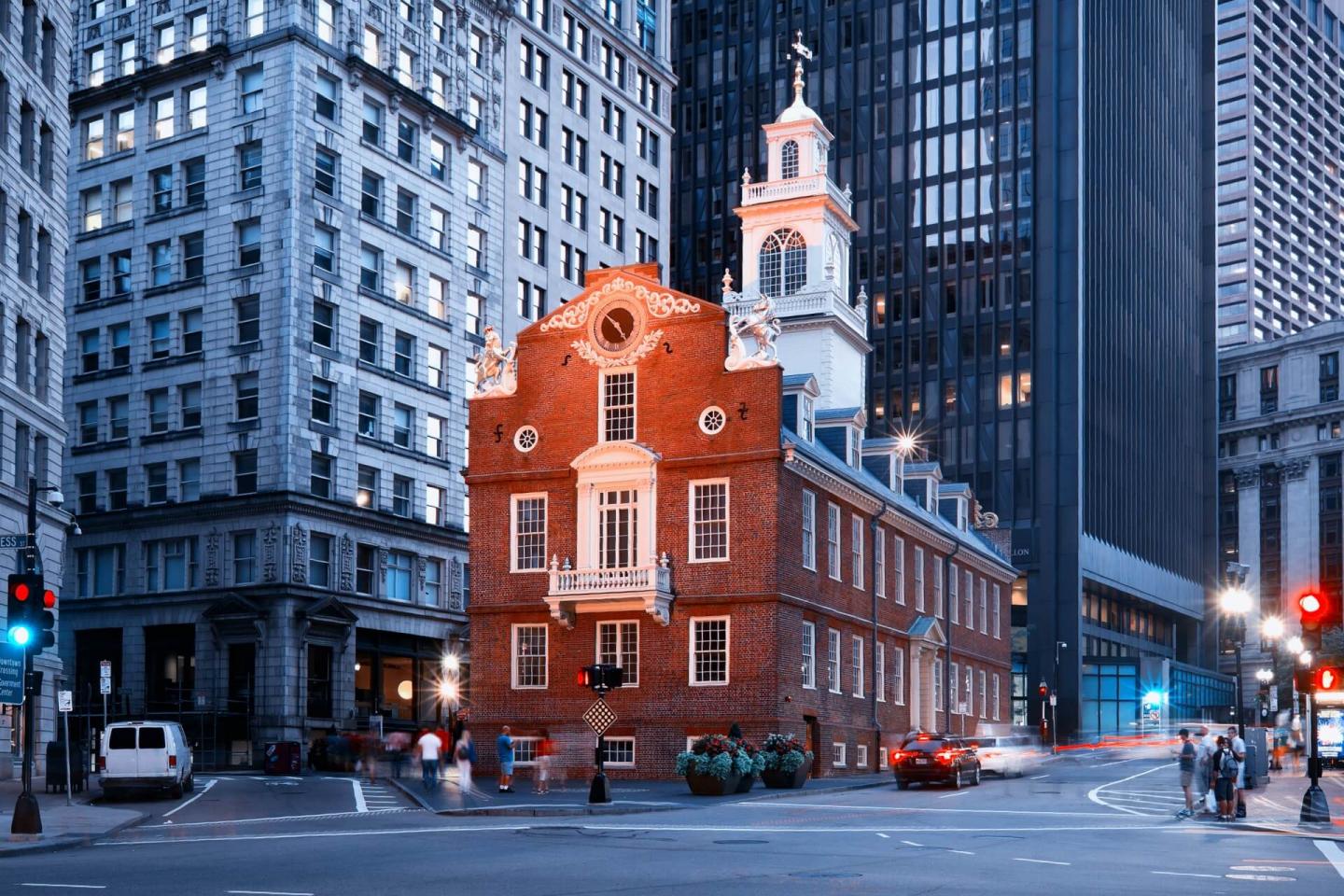
Downtown Boston and the adjoining Financial District occupy some of the oldest street layout in the city, a tangle of narrow lanes that predates the automobile and still shapes how the area functions today, even as modern skyscrapers have risen above the colonial-era street grid. The result is a neighborhood where business towers sit directly alongside Revolutionary-era landmarks, often on the same block.
For visitors, this overlap is genuinely convenient: a stay here puts historic sites, shopping, and the city's main business district all within a short walk of each other.
Historic Sites Among the Skyscrapers
The Old State House, built in 1713, sits at a busy downtown intersection directly beneath the shadow of much taller modern office towers, and it was from its balcony that the Declaration of Independence was first read publicly in Boston. Nearby, the site of the Boston Massacre is marked by a cobblestone circle set into a traffic island, easy to miss if you're not specifically looking for it.
Government Center, a short walk away, anchors the transition between the historic core and Faneuil Hall, with several subway lines converging nearby, making it one of the more practical transit hubs for reaching other downtown sites on foot.
The Financial District's Modern Skyline
Boston's Financial District developed its modern skyline mainly from the mid-20th century onward, with the city's tallest buildings concentrated in a compact cluster rather than spread across downtown. Post Office Square, a small landscaped park ringed by office towers, offers a quiet green space in the middle of the business district, popular with office workers at lunchtime and a reasonable rest stop for visitors as well.
Because the district is primarily a business area, it has a noticeably different rhythm on weekdays versus weekends, with far more foot traffic and open shops during business hours and a quieter, sometimes sparse feel in the evenings and on Saturdays and Sundays.
The Custom House Tower, once the tallest building in Boston when its clock tower addition was completed in the early 20th century, still stands out along the district's skyline despite being dwarfed by later construction, and its observation level offers a view across the harbor that's less crowded than more heavily promoted lookout points elsewhere in the city.
Downtown Crossing and Shopping
Downtown Crossing, a pedestrian-oriented shopping district at the edge of the Financial District, has long served as one of Boston's main retail hubs, mixing larger stores with smaller, independent shops along its mostly car-free streets. The area sits within walking distance of both the historic sites further toward Government Center and the Financial District's office towers, making it a natural midday stop.
Compared to the boutique-heavy shopping of Back Bay's Newbury Street, Downtown Crossing tends to skew toward larger retailers and everyday shopping, giving visitors two genuinely different shopping experiences depending on which part of the city they're in.
Boston Common: Where Downtown Meets the Park System
Boston Common forms the western edge of downtown, a large public park set aside for common use in 1634, making it the oldest public park in the United States. The park has served many functions over the centuries, from colonial-era militia training ground to public grazing land, and it now acts as a green buffer between the Financial District's office towers and the residential streets of Beacon Hill rising just beyond it.
The Common also marks one end of the Freedom Trail, the marked walking route that continues from here through the rest of downtown's historic sites, and it hosts a public garden, a historic burying ground, and a seasonal ice rink depending on the time of year. For visitors staying downtown, the park offers an easy, unticketed break from the business district's denser blocks without requiring a trip to another neighborhood.
Where to Stay Downtown
Hotels in the Financial District and downtown core tend to cater heavily to business travelers on weekdays, which sometimes means better leisure rates on weekends when corporate demand drops off. The area's central location also makes it a reasonable base for reaching the Seaport District across the channel or walking directly into the North End for dinner.
Because the Financial District is primarily commercial, the immediate streets can feel quiet at night compared to neighborhoods with more residential density, which is worth knowing for visitors who prefer a livelier evening atmosphere just outside their hotel.
Visitors who want a central downtown base but a bit more evening activity right outside their hotel sometimes split the difference by staying along the edge of the district closest to Faneuil Hall, keeping the convenience of downtown's transit connections while landing closer to the restaurants and foot traffic of the historic marketplace.
Frequently Asked Questions
Is downtown Boston safe and walkable at night?
The area is generally walkable, though as a primarily commercial district it can feel quieter in the evenings and on weekends compared to more residential neighborhoods nearby.
What historic sites are in the Financial District?
The Old State House and the marked site of the Boston Massacre both sit within the district, directly alongside the area's modern office towers.
Is Downtown Crossing a good place to shop?
Yes, it's one of Boston's main pedestrian shopping districts, generally leaning toward larger retailers and everyday shopping compared to the boutiques of Back Bay.
Are hotel rates cheaper downtown on weekends?
Often, yes. Many downtown hotels cater to weekday business travel, which can mean better leisure rates when corporate demand drops on weekends.