Beacon Hill: Walking Boston's Most Historic Neighborhood
By Toronto Free Press
Updated: October 21, 2026
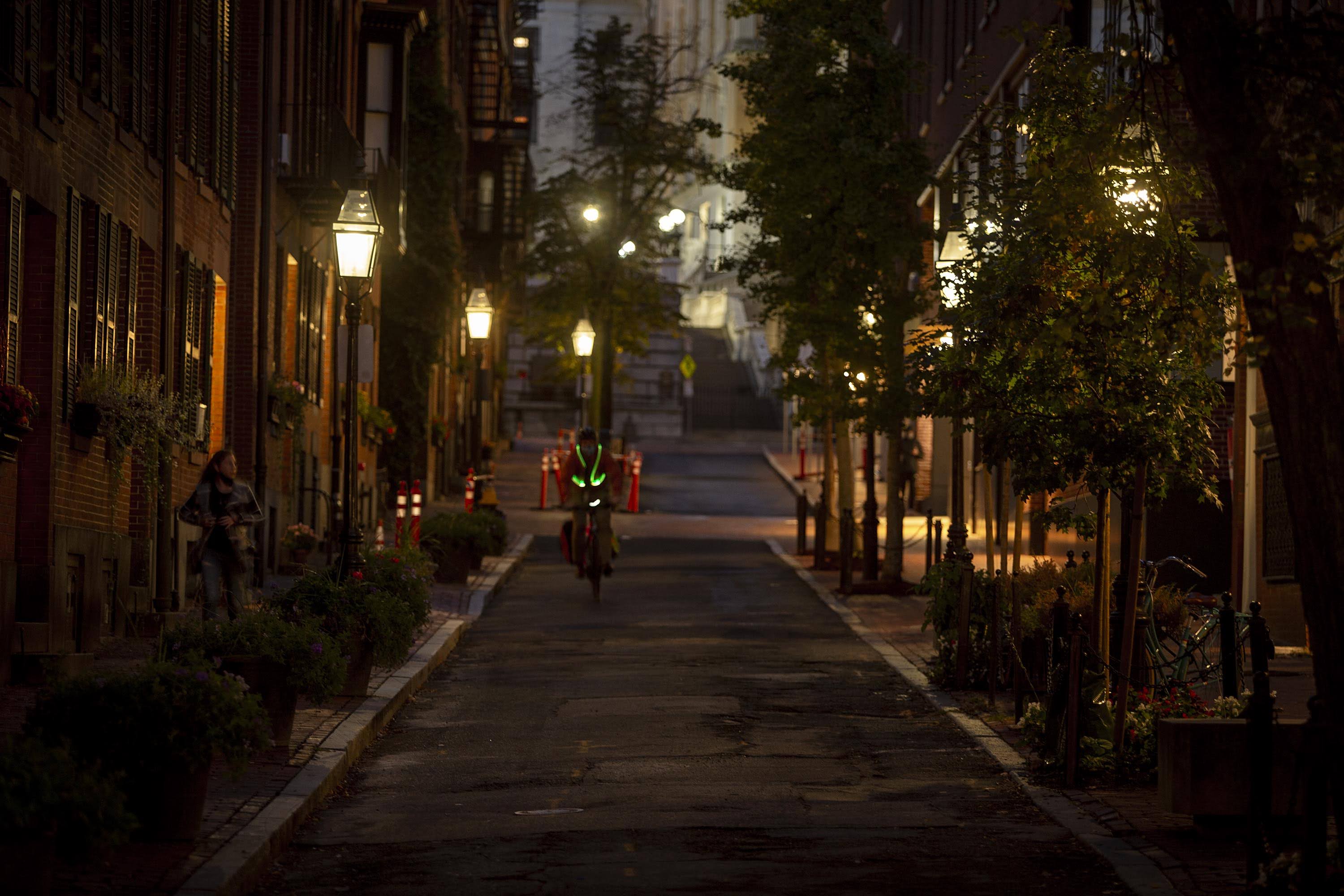
Beacon Hill is best experienced on foot, and that isn't just a suggestion -- the neighborhood's narrow, gas-lit streets and brick sidewalks were never designed for much vehicle traffic in the first place. Rising just north of Boston Common, the hill takes its name from a colonial-era beacon that once stood at its summit to warn of approaching danger.
What survives today is one of the most intact 19th-century residential districts in the United States, a dense grid of Federal and Greek Revival rowhouses that has changed remarkably little since its building boom in the early 1800s.
The Massachusetts State House
The Massachusetts State House sits at the top of Beacon Hill, its gold-leafed dome visible from much of downtown Boston. Completed in 1798 and designed by architect Charles Bulfinch, it remains the seat of the state's government and one of the most architecturally significant public buildings in New England.
The building's front lawn and golden dome make it a natural starting or ending point for a Beacon Hill walk, since the neighborhood's residential streets fan out downhill from this high point in several directions. Guided tours of the interior are available on a scheduled basis, covering the building's legislative chambers and historic artwork.
Acorn Street and the Neighborhood's Cobblestones
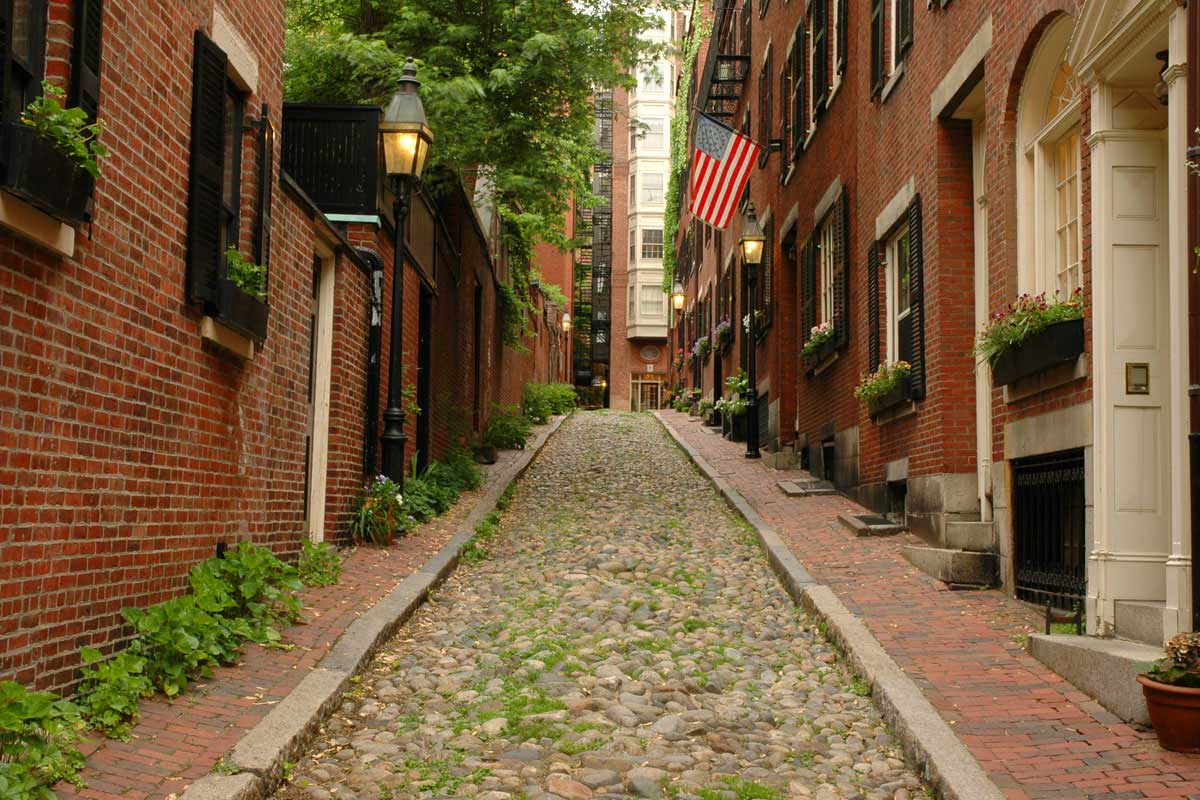
Acorn Street, a short lane of cobblestones lined with small brick rowhouses, is often cited as one of the most photographed streets in the United States, and it's easy to see why once you're standing on it. The street was originally built to house coachmen and domestic staff working for the grander homes nearby, a detail that explains its smaller scale compared to the mansions on neighboring Mount Vernon Street.
Louisburg Square, a few blocks away, offers a different register of the same era: a private, gated park ringed by some of Beacon Hill's grandest townhouses, inaccessible to the public but worth seeing from the street. Together, Acorn Street and Louisburg Square bracket the range of Beacon Hill's 19th-century residential architecture, from modest to imposing.
Charles Street Shops and Cafes
Charles Street runs along the base of Beacon Hill and functions as the neighborhood's main commercial strip, lined with antique shops, independent bookstores, and small cafes housed in the same brick buildings as the residential streets above. Unlike the larger retail corridors elsewhere in Boston, Charles Street has kept a village-like scale, with storefronts that have operated for years alongside newer arrivals.
The street makes a natural break point on a longer walk, offering a place to sit down after covering the steeper residential blocks higher up the hill. It also connects easily toward the Public Garden and, beyond it, the shopping streets of Back Bay.
The Black Heritage Trail and African Meeting House
Beacon Hill's north slope was historically home to one of the largest free Black communities in antebellum Boston, and much of that history is preserved along the Black Heritage Trail, a walking route marked by plaques through the neighborhood's side streets. The African Meeting House, built in 1806 and believed to be the oldest Black church building still standing in the United States, anchors this part of the trail.
The trail connects a series of historic homes and institutions tied to the abolitionist movement, offering a layer of Beacon Hill's history that runs alongside, but is distinct from, the neighborhood's more widely photographed Federal-era streetscapes. Information panels along the route give context at each stop, making it possible to follow independently without a guide.
Planning a Walk Through Beacon Hill
Because the neighborhood is small and dense, a thorough walking visit can realistically be done in two to three hours, though it rewards a slower pace given how much detail is packed into a few square blocks. Starting at the State House and working downhill toward Charles Street is a natural route that follows the neighborhood's original topography.
The brick sidewalks and cobblestones that give Beacon Hill its character are also its main practical challenge, so comfortable, flat footwear matters more here than in most other Boston neighborhoods. Good walking shoes are also worth packing for a longer day that continues on toward other parts of the city.
Boston Common and the Edge of Beacon Hill
Beacon Hill's southern slope descends directly to Boston Common, the oldest public park in the United States, set aside for public use in 1634 and still functioning as a genuine city green rather than a manicured tourist attraction. The Common has served as grazing land, a military training ground, and a public execution site over its long history, and informational markers around the park note several of these earlier uses.
The Common also marks the starting point of the Freedom Trail, the walking route that continues from here toward the historic sites of downtown Boston, making it a natural place to begin or end a Beacon Hill walk depending on which direction a visitor is headed next. On weekday mornings, the park fills with downtown office workers cutting across it on their commute, a reminder that the Common functions as ordinary civic space as much as a historic site.
Frequently Asked Questions
Can you go inside the Massachusetts State House?
Yes, scheduled tours cover the building's interior, including its legislative chambers, though the exact schedule can change, so confirming current tour times before visiting is worthwhile.
Why is Acorn Street so narrow?
The street was originally built to house coachmen and domestic workers employed by Beacon Hill's larger townhouses, which is why its scale is smaller than the grander residential streets nearby.
What is the Black Heritage Trail?
It's a marked walking route through Beacon Hill's north slope that traces the history of one of antebellum Boston's largest free Black communities, anchored by the African Meeting House.
How long does it take to walk Beacon Hill?
A thorough walk covering the State House, Acorn Street, Louisburg Square, and Charles Street typically takes two to three hours at an unhurried pace.