Back Bay, Boston: A Visitor's Guide to the Neighborhood's Brownstones, Shopping, and Hotels
By Toronto Free Press
Updated: October 21, 2026
Back Bay is the Boston neighborhood most visitors picture when they imagine the city's brick-and-brownstone streetscapes, and it earns that reputation honestly. The district was built on filled tidal land starting in the mid-1800s, laid out on a strict grid rather than Boston's older tangle of colonial lanes, which makes it one of the easiest parts of the city to navigate on foot.
The neighborhood works equally well as a shopping destination, an architecture walk, or a base for a longer stay, since its hotels sit within easy reach of Copley Square, the Charles River Esplanade, and the subway lines that connect to the rest of Boston.
The Brownstones and Back Bay's Grid Streets
Back Bay's residential blocks are lined with four- and five-story Victorian brownstones and bowfront townhouses, many built between the 1860s and 1890s as the filled land was developed block by block moving west from the Public Garden. The architectural consistency is deliberate: deed restrictions from the original development era controlled building heights and setbacks, which is part of why the streetscape still reads as a cohesive whole rather than a patchwork of eras.
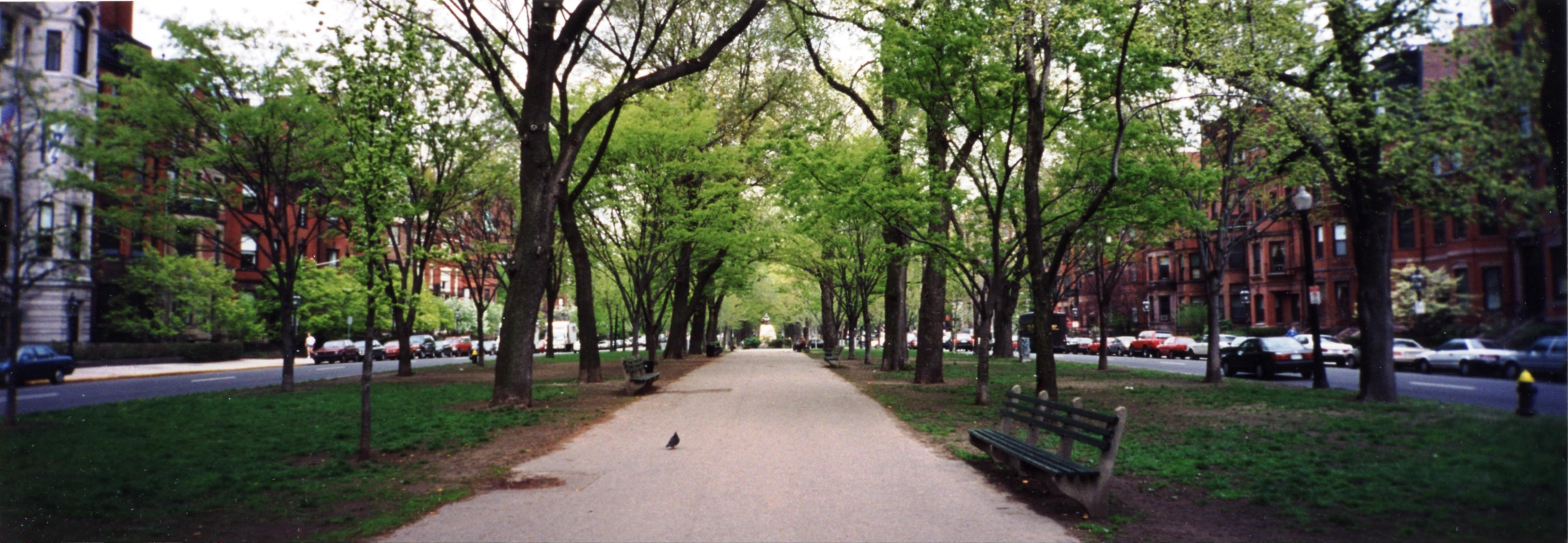
The cross streets running from the Public Garden toward Kenmore Square are named alphabetically -- Arlington, Berkeley, Clarendon, Dartmouth, Exeter, Fairfield, Gloucester, Hereford -- a layout quirk that makes it simple to judge distance and direction without a map. Commonwealth Avenue, the neighborhood's grand boulevard, has a landscaped mall running down its center that was modeled on Parisian boulevards and is worth a slow walk in any season.
Because the brownstones are mostly private residences and small apartment buildings, the appeal here is the street-level experience rather than any single building you can tour. Early morning or early evening light on the bowfronts and wrought-iron railings is when the neighborhood photographs best.
Newbury Street and Boylston Street Shopping
Newbury Street runs parallel to Commonwealth Avenue and is Back Bay's main shopping corridor, mixing international fashion brands near the Public Garden end with independent boutiques, galleries, and cafes as the street continues toward Massachusetts Avenue. The brownstones along Newbury were converted to ground-floor retail generations ago, so shopping here happens inside the same historic buildings that define the rest of the neighborhood, not in a purpose-built mall.
Boylston Street, one block over, carries more of the neighborhood's everyday traffic and larger retail, including the Prudential Center complex with its mall, observation deck, and connections to the Hynes Convention Center. The two streets together give Back Bay a shopping district with real range, from flagship stores to small specialty shops that have operated for decades.
Both streets are walkable end to end in under thirty minutes, which makes it easy to cover the whole corridor on foot rather than planning a single destination and leaving.
Copley Square and Its Landmark Buildings
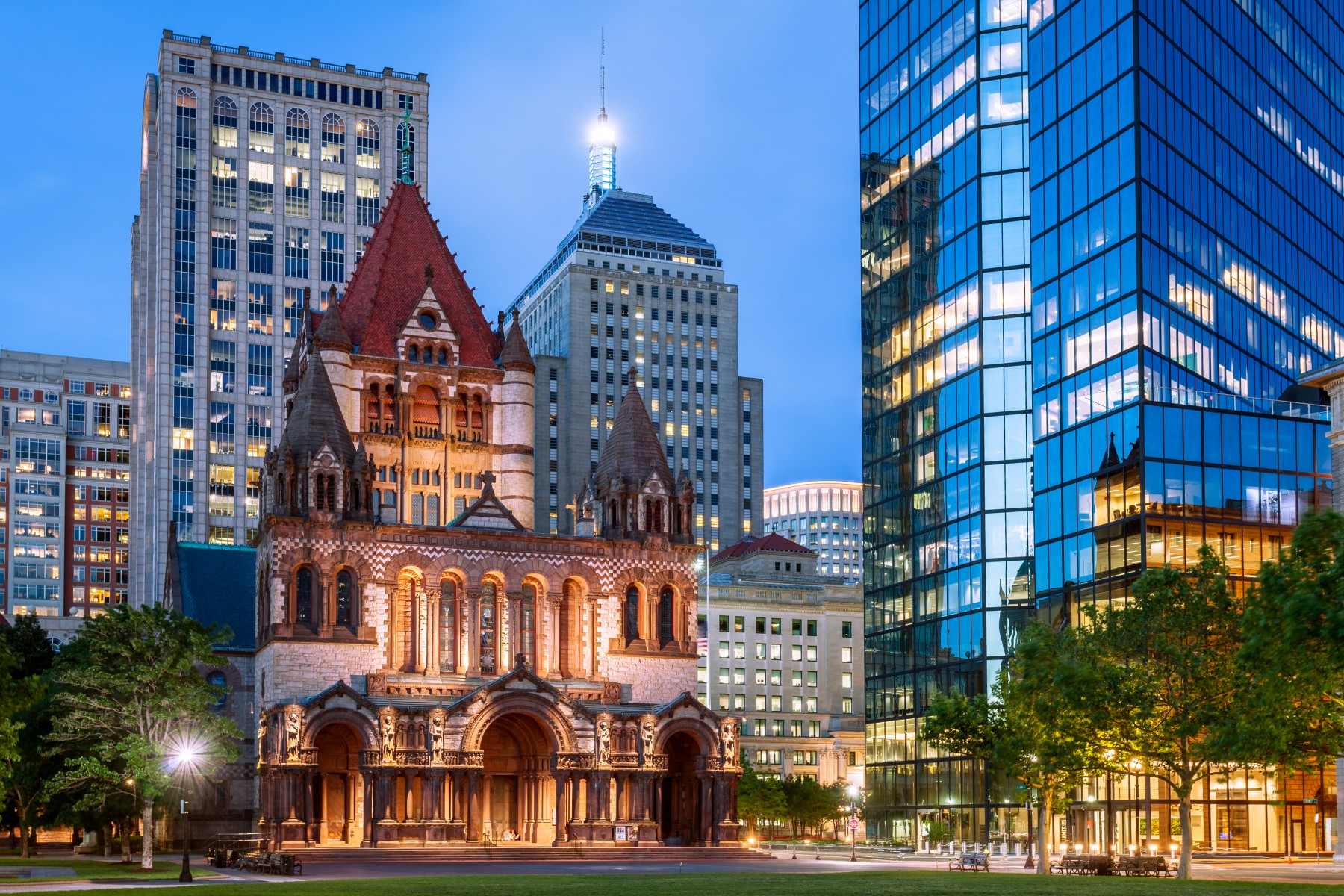
Copley Square anchors the western end of Back Bay's shopping district and is ringed by some of Boston's most recognizable architecture. Trinity Church, a Romanesque Revival landmark completed in 1877, faces the mirrored glass facade of the John Hancock Tower across the square, a deliberate architectural contrast that has become one of the city's defining images.
The Boston Public Library's central branch sits on the square's western side, with a research building whose courtyard and reading rooms are open to visitors, not just cardholders. A farmers market runs in the square on certain days during the warmer months, giving the plaza a different, more local character than the surrounding retail streets.
The square also functions as a transit hub, with a Green Line subway stop that makes it a practical starting point for exploring neighborhoods further out, including a day trip across the river into Cambridge.
Where to Stay in Back Bay
Back Bay's hotel options cluster mainly around Copley Square and along the Boylston Street corridor, putting most stays within a short walk of Newbury Street shopping, the Charles River Esplanade, and the Green Line subway. The neighborhood's central location also makes it a reasonable base for day trips to other parts of the city without needing a car.
Because Back Bay is compact and grid-based, the distance between a hotel near the Public Garden and one near Massachusetts Avenue is still only a fifteen- to twenty-minute walk, so the exact block matters less here than in more sprawling parts of Boston. Visitors prioritizing proximity to the Financial District or the Common may prefer a stay closer to the Arlington Street end of the neighborhood.
The Public Garden and Charles River Esplanade
Back Bay's eastern edge meets the Public Garden, a formal 19th-century park built just before the Back Bay landfill project began, known for its swan boats gliding across a small lagoon and a bronze statue of George Washington on horseback at its Commonwealth Avenue entrance. Unlike the more rugged, naturalistic design used elsewhere in Boston's park system, the Public Garden follows a formal, symmetrical layout with seasonal flower beds along its paths.
Along Back Bay's northern edge, the Charles River Esplanade offers a long riverside path for walking, running, and cycling, with the Hatch Shell outdoor concert venue hosting free performances through the warmer months. The Esplanade also gives one of the better views across the water toward Cambridge, and it connects without much difficulty into a longer riverside walk for visitors who want to cover Back Bay and the waterfront in the same outing before heading elsewhere in the city with the help of a broader Boston trip-planning guide.
Frequently Asked Questions
What makes Back Bay's architecture distinct from the rest of Boston?
Back Bay was built on filled land starting in the mid-1800s and laid out on a planned grid with consistent building heights, unlike the older, irregular street pattern found in colonial-era neighborhoods closer to the harbor.
Is Back Bay walkable without a car?
Yes. The neighborhood's grid layout and Green Line subway access make it one of the most walkable parts of Boston, and most hotels sit within a short walk of Copley Square and Newbury Street.
What is the best time of day to photograph the brownstones?
Early morning or early evening light tends to flatter the bowfront facades and tree-lined streets, especially along Commonwealth Avenue's landscaped mall.
Is Copley Square a good base for exploring other parts of Boston?
Yes. It sits on the Green Line and is within easy reach of downtown, the Esplanade, and connections toward Cambridge, making it a practical hub for day trips.